How Big Is Your Coordination Tax? Here's How to Find Out

After years of hard work, your company is scaling – hurray! Bigger profits are right around the corner! At least, that’s how someone who hasn’t heard of coordination tax might see it.
If, in actuality, your company is scaling, then you’re probably clocking a recurring theme: everyone is busier, but your output doesn’t quite correlate. This subtle slowdown isn’t necessarily about your team working less; it's the hidden cost of keeping a larger team aligned. It’s a coordination tax.
What began as a software development term (fun factoid for you there) now applies to a range of knowledge businesses, from agencies and consultancies to accounting and legal teams. This tax can crop up in everyday mundanities, like waiting for feedback, casting an eye over a colleague's work, chasing missing details, or sitting through status updates. None of these are “bad” things, but when they expand faster than productive work, they quietly drag on a team’s efficiency and margins.
So, join me as we break down the minutiae of coordination tax, where it creeps in, and how to reduce coordination overhead without weakening the wonder that is human collaboration!
Key Takeaways
- As an increased workforce creates more communication paths, dependencies, and variability, coordination tax tends to grow faster than your headcount. This makes the system heavier to coordinate (at least initially).
- Knowledge work teams commonly encounter coordination tax, experiencing rising alignment overhead as work begins expanding into more roles, tools, and checkpoints.
- Everyday friction, like slower delivery, stalled handoffs, a repeated need for re‑alignment, and fragmented workdays indicates that coordination is overtaking your execution.
- Reducing coordination tax just needs a few simple structural fixes, like clear ownership, better feedback processes, and tool choices.

What coordination tax actually means
Simply put, the “coordination tax” is the time your business loses whenever people or teams have to sync up – before any real work can kick off.
It’s a kind of accumulated friction, because it’s the time spent trying to get or keep everyone on the same page, as opposed to doing work that moves a project or your business forward. Think introductory meetings, Slack threads, handoffs, and pending approvals; all the small pauses and checkpoints that surreptitiously snowball as a company grows.
This silent “tax” can, as a leader, be a useful touchstone to identify where work tends to slow, when and why teams feel stretched, and where your efficiency is leaky.
Why coordination tax increases as your business grows
As businesses grow, the work is no longer linear; it gets increasingly interconnected. As more clients mean more projects and levels of expertise, the team gains more layers of interdependence that didn't exist when the team was small.
Consequently, tasks that used to flow cleanly from A to B now have multiple touchpoints. This creates a coordination load that increases faster than personnel because every new team member added to the mix brings more interactions and further alignments, not just capacity.
Growth also brings more variability, whether it’s different working styles, expectations of completion, or interpretations around quality or pace. As these differences build up, teams spend more time debating how to do the work itself as opposed to what needs to be delivered.
Furthermore, scaling generally involves more specializations. While this improves quality, it can also increase the number of handoffs needed to complete even simple tasks.
The overall result is a natural rise in coordination overhead, not because humans are inherently less efficient, but because the system itself becomes more complex.
Common sources of coordination overhead
As team size grows, the main source of friction in coordination is often structural rather than a delay in communication. These issues are not wildly dramatic and thus easily go unnoticed in isolation, but can quietly accumulate and slow down delivery.
Below is a checklist of sorts to help you identify some of these types of friction points:
- Context switching: Naaaw, our good old and apparently omnipresent pal. Switching between tasks of different cognitive demands leads to less focus and takes longer to complete.
- Tool sprawl: Teams have to search, reconcile, and cross-reference information sitting across different platforms before they can move forward.
- Ownership issues: When it’s not clear who owns what, decisions get delayed and work stalls waiting for someone to take ownership.
- Parallel but misaligned work: Teams are working in parallel but then discover they’re misaligned and have to go back and fix things.
- Procedure drift: Where teams have different processes, they create friction at the points where those processes intersect.
Real‑life coordination tax examples across industries
To understand coordination tax in the wild, it’s useful to look at everyday situations across a range of knowledge businesses.
Obviously, don’t view the following as a failure on your part, but simply as typical scenarios where work gets stuck because people, tools, or steps need to get aligned before key progress can be made. Knowledge is power, so the sooner you can spot possible problems, the sooner you can put a stop to this tax siphoning off your profits.

Here are some routine examples of things you might look for, alongside some potential ways to mitigate:
- Agency feedback/approval bottlenecks: This can look like creative teams waiting days for client feedback and getting partial notes that then start another alignment cycle. One way to achieve this is to set expectations upfront by being more transparent and employing structured feedback templates to reduce back-and-forth.
- Multi-stakeholder reviews: A piece of work is sent to several internal reviewers, who each add comments that need clarifying even before the client sees it. Shorten review cycle by limiting reviewers and defining one decision maker.
- Accounting dependency chains: The absence of one document can bring a whole workflow to a standstill because downstream tasks depend on that one piece of information. Use intake checklists to ensure you have everything you need from the start.
- Legal team coordination: Lawyers working on related matters need to coordinate their interpretation, updates, and risk assessments before they put pen to paper. Set up regular reference notes or quick syncs to get alignment on key positions early.
- Software team environment hold-ups: Engineers need to wait for access, approvals, or environment updates before they can test or ship work, slowing down the entire release cycle. Automate environment provisioning and reduce manual approval gates where possible.
These examples demonstrate how coordination tax grows insidiously with scale, and consumes time that should be used for driving delivery, momentum, and margin.
Once you are able to identify where coordination is piling up, you are in a far better position to lessen the load – not by reducing collaboration, but by making it smoother, more transparent, and easier to sustain as your company grows.
How to start assessing your coordination tax
A practical way to measure your coordination tax is to look at the flow of work through your business and measure where alignment is taking up your time. Consider the following:
- Compare delivery time versus coordination time: Take a look at some recent projects and try to estimate the hours that went into actually doing the work versus the hours that went into meetings, reviews, approvals, out-of-control Slack threads, etc. The wider the gap, the more overhead.
- Touchpoint count: Describe a common task from start to finish. Now count how many people it has, tools, and checkpoints. More touchpoints = more coordination overhead.
- Identify stall points: Find repeated delays in handoffs, feedback loops, or unclear ownership. Cumulatively, these delays amount to a significant drag.
- Check workday fragmentation: Frequent context switching, tool‑hopping, and re‑explaining work indicate that coordination is overtaking focused delivery.
This is usually where I’d doff my cap to how a time tracking accountability partner like Memtime can help hugely here, but sure, we’ll do that in the next section, shall we?
How to reduce coordination tax without hurting collaboration
Reducing coordination tax isn’t about reducing collaboration, it’s about reducing the friction that makes collaboration more painful than it needs to be. The most effective changes are small structural changes that speed up the work without pressure or process.
- Clarify ownership: One person should have ownership over each project and decision. When too many people are responsible for something, the work slows down because no one is sure who should take the first step.
- Introduce transparent starting conditions: Make the starting point look the same for everyone across the board. Capture your requirements, files, and context up front to avoid blocking downstream work with missing details and varying delivery expectations.
- Streamline feedback: Again, establish what “good” (not perfect) looks like before work begins and, most importantly, limit reviewers. Structured, routine feedback can help prevent endless loops and keeps momentum going.
- Minimize tool spread: When people have to check more systems, this can result in increased context switching and the potential of duplicate effort – so best consolidate where you can.
- Protect uninterrupted delivery time: Reserve predictable time slots for deep work. Coordination costs money when you get interrupted by repeated pings and micro-updates alongside delivery.
The next challenge is knowing where to start as you begin tightening these areas. Memtime can help by showcasing which part of your workday is most fragmented, which projects accumulate the most alignment overhead, and where coordination consistently interrupts delivery.
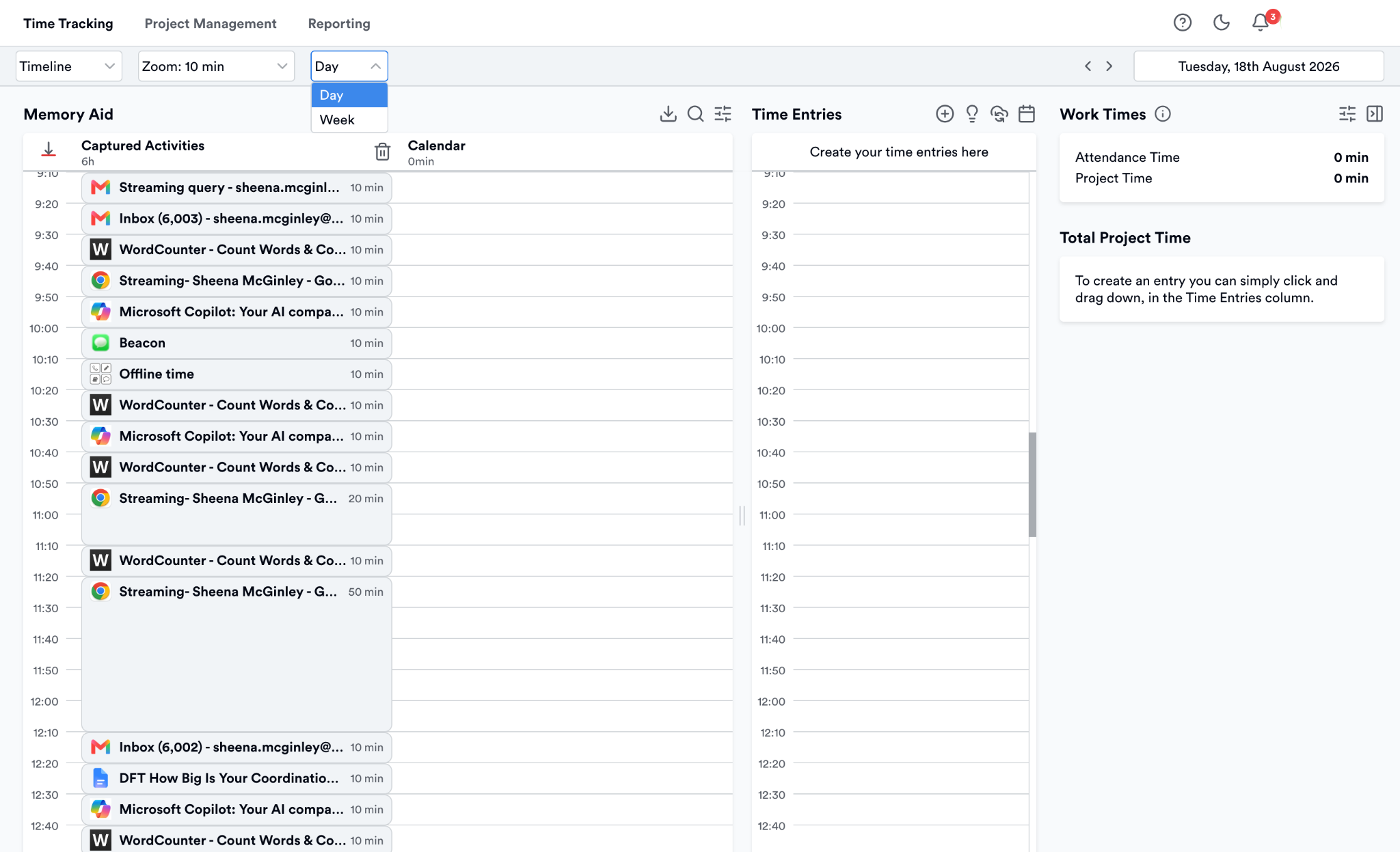
Memtime doesn’t measure coordination tax as a metric – it gives you, as a leader, the visibility to reduce it with precision rather than guesswork.
So, here’s the part where I ask if you’d like a 14-day free trial to see all this in action and how you can start to benefit your business today. Seriously though, what have you got to lose? Apart from literally hours lost to coordination tax!
FAQs
Are there signs that your business is paying too much coordination tax?
If delivery slows down even with more headcount, teams feel busy but not really moving; work stalls while people wait for decisions, context, or reviews. You’re likely paying way too much for coordination. If alignment work is consistently outweighing productive work, then coordination is beginning to dominate your operating system.
How does coordination tax show up in client relationships?
Coordination tax often manifests externally as protracted turnaround times, inconsistent responsiveness, or multiple clarification rounds with clients. Even when the work is good, the experience can seem slow thanks to delays in internal alignment that can then ripple outward.
Can coordination tax impact team morale?
Yes. If work stalls repeatedly or requires constant re-alignment, teams experience a feeling of being “busy without progress.” This results in frustration, less perceived autonomy, and delivery feeling harder than it should, even when people are doing well.
Does coordination tax affect profitability even if revenue is growing?
Absolutely. As alignment overhead expands, delivery time stretches, and margins shrink. A business can grow top‑line revenue while quietly losing profit because more hours are spent coordinating than producing billable or value‑creating work.

Sheena McGinley
Sheena McGinley is a columnist and features writer for the Irish press since 2008. She’s also a business owner that is conscious of how time tracking can foster progress. She wrote for SaaS companies and businesses that specialize in revenue optimization by implementing processes. She has the unique ability to digest complex topics and make them easy to understand. She shares this precious skill with Memtime readers. When she's not making words work for people, Sheena can be found taking (very) brisk dips in the Irish Sea.