Effective Hourly Rate: The Metric That Exposes Undercharging

If you charge by the hour, or work on fixed‑fee projects, you probably have a number in your head for what you earn per hour. But – brace yourselves – that number is almost never your effective hourly rate.
Your effective hourly rate reflects what you actually earn after factoring in the unseen work that fills your day – you know, the emails, the impromptu proposals, the sometimes endless revisions, admin, the distractions in general. If you’re a freelancer, consultant, or small agency owner, you might find that the real figure ends up being much lower than the rate you advertise.
It's really important to figure out your effective hourly rate - so we've built a simple calculator to help you get your actual number. Plug in your earnings, hours, and unbilled time, and you'll see exactly where you stand.
Key Takeaways
- Your effective hourly rate is your total earnings divided by total hours worked. This includes both billable and unbillable time, so you can get a more accurate picture of your real earnings.
- Unbilled work creates a big gap between perceived and actual income. Even a well‑priced project can produce a much lower effective hourly rate if hidden hours aren’t accounted for.
- The real economics of your business is the effective hourly rate. It displays profitable versus unprofitable projects, uncovers areas where workflow is less than optimal, and reveals which clients or services are taking longer than expected.
- To increase your effective hourly rate, start with better time visibility. Accurate, automatic time tracking means you'll know where your hours are going, you'll have less hidden work, and your pricing decisions will be based on real data, not arbitrary estimations.

Effective hourly rate meaning
Your effective hourly rate is the amount you actually earn for every hour you work – not just the hours you bill. That distinction matters because, like I said, most freelancers and consultants dramatically overestimate their real earnings.
The effective hourly rate piece becomes clear once you include everything that surrounds the paid work (those aforementioned tasks and distractions that quietly consume your day). When all of that time is added up, your stated hourly rate and your effective hourly rate rarely match.
It’s the foundation for every subsequent pricing decision you make.
How to calculate your effective hourly rate
Calculating your effective hourly rate is simple in theory: you divide your total earnings by the total number of hours you actually worked. The challenge is that “total hours worked” includes far more than the billable time you record on an invoice. It also includes the unbilled work that surrounds every project and results in overservicing clients. Once you add those hours, the number you thought you were earning per hour often shifts wildly.
So, behold our effective hourly rate calculator, which is – as you'll see – super effective:
It’s designed to make the process as clear and frictionless as possible. All you need to do is:
- Enter total earnings
- Enter billable hours
- Add unbilled time
- Add optional business expenses
- See your real hourly rate
Go on, give it a whirl, you know you want to… I’ll wait here….
Real-life effective hourly rate example: the math behind the gap
To see how quickly your effective hourly rate can shift, let’s take a wander through a concrete example. Imagine you earned $8,000 from a project. You logged 90 billable hours, which means on paper you might assume you earned around $88 per hour. However, that number only holds if every hour you worked was billable... and that’s almost never the case.
Now, add the 50 unbilled hours that supported the project: so the emails, revisions, admin, extraneous comms, planning, and everything else that doesn’t appear on your average invoice – the invisible work we all know too well. When you do that, your total time worked becomes 140 hours.
Then, when you apply the formula:
effective hourly rate = total earnings ÷ total hours worked
$8,000 ÷ 140 = $57 per hour
You can see a whopping 35% drop from what you thought you were earning.
This is the gap that catches most freelancers and consultants off guard. It’s not that the project was priced incorrectly, it’s that the unbilled time was never accounted for. Once you see the real number, it becomes clear where your time is going, how much of it is unpaid, and why your pricing may not be supporting your workload.

What your effective hourly rate reveals about your business
Once you calculate your effective hourly rate, you can consider it a practical diagnostic tool for understanding how your business actually operates. It outlines whether the way you price your work aligns with the time it really requires.
When your effective hourly rate is noticeably lower than your stated rate, it’s a sign that unbilled work is absorbing waaaaaay more time than expected – whether through scope creep, fragmented communication, or the unpredictability overhead that naturally accompanies client work.
Your effective hourly rate also highlights which projects or clients are genuinely profitable. Think about it; two projects priced the same can produce very different outcomes – but only if every single hour is properly accounted for. This gives you a clearer view of where your capacity is going and which parts of your workload deliver the strongest return.
More importantly, it can reveal three different types of patterns:
- Workflow patterns: Where inefficiencies, bottlenecks, or repeated tasks appear
- Structural patterns: How your services are scoped, packaged, and delivered
- Client‑specific patterns: Which clients consistently require more of your support
As you can see, each one tells you something different about how your business actually runs.
Increasing your effective hourly rate through better time visibility
Improving your effective hourly rate isn’t just about raising your rates (although that’s nice). It begins with greater visibility into how you spend your time. You’ve been underestimating your unbilled hours consistently because you’re relying on memory or rough estimates, and it’s hard to make informed decisions about pricing, scope, or capacity.
Accurate time data helps you identify three separate levers you can pull:
- Volume: All the work you do that you don’t bill for
- Distribution: Which projects or clients create the most hidden hours
- Cause: Why those hours rack up (process, communication, scope, or workflow)
When you can clearly see these levers, you can either adjust your workflow, set those boundaries, or reorganize your services to reduce unbilled time. This is where I covertly remind you that automatic time tracking tools do make it easier, by passively capturing your work, without any manual input from already very busy souls.
In addition, automatic time tracking tools give you accurate data, so your effective hourly rate becomes something that you can actively impact. Over time, this visibility increases, and you can price more confidently, plan more realistically, and make sure the hours you put in are reflected in the income you generate.
How Memtime can help…
The math behind your effective hourly rate is simple. The tracking isn’t. Most people don’t have an accurate picture of how long their work actually takes because manual tracking breaks down fast. The limitations are well‑known:
- You tend to forget to start or stop timers
- Logging time interrupts your focus
- Manual tracking tends to become wildly inconsistent over time
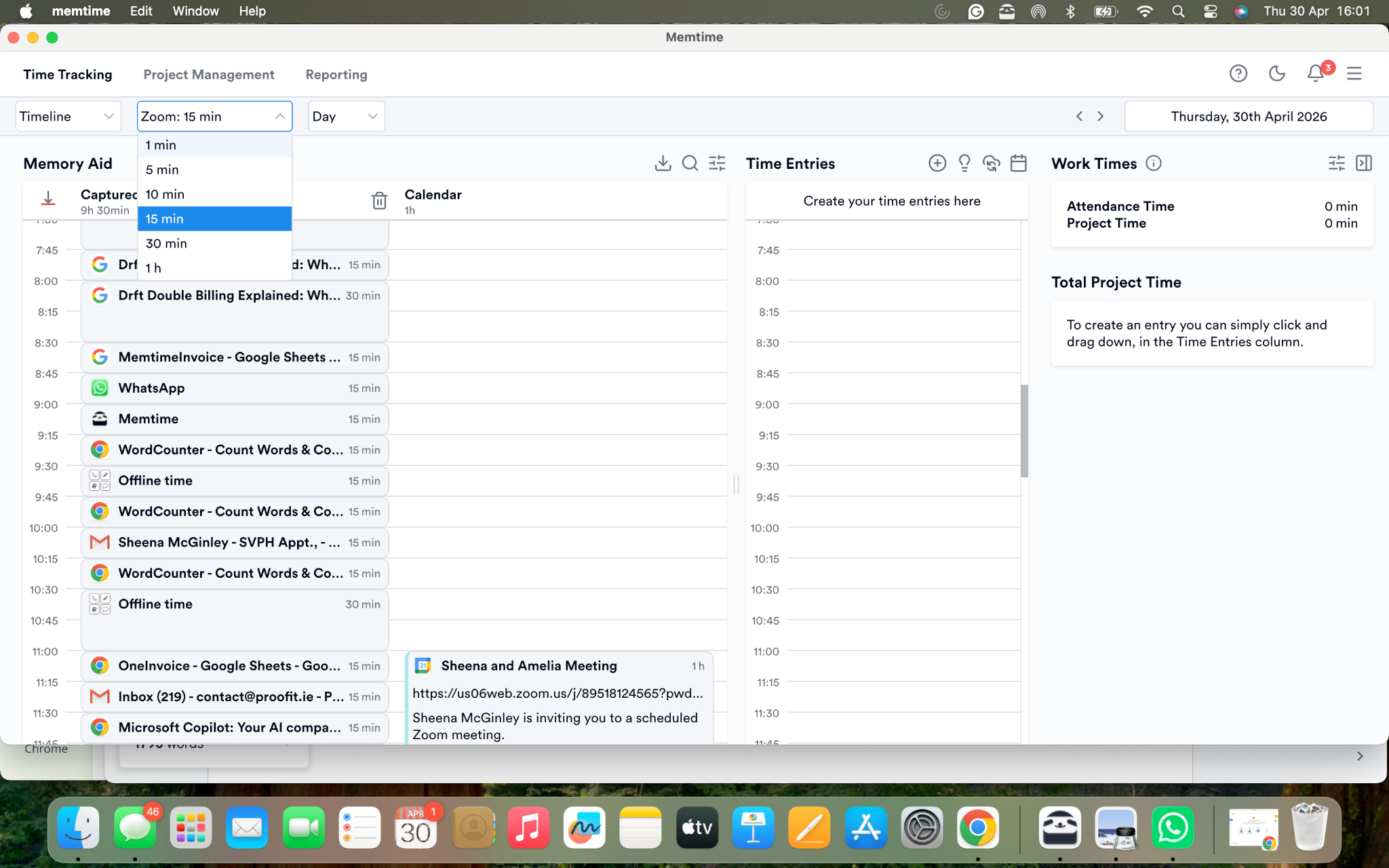
That’s where Memtime helps – in a quiet, non‑intrusive way. It tracks your work automatically in the background, with no timers or manual input. It captures all of your activity as it happens and gives you a clear view of where every minute of your time is going.
PS. And if you're still figuring out what to charge in the first place, our freelance hourly rate calculator can help with that too.
FAQ
What are the biggest sources of hidden work that lower your effective hourly rate?
Aside from emails and administrative work, the most common hidden drains are switching between tasks, client delays, unclear briefs, too many revisions, and time spent explaining decisions again. These hours add up without you noticing, and they have a real effect on how much money you make.
Why fixed‑fee projects can distort your effective hourly rate?
Fixed fees only work when the scope doesn't change. Any drift, even a little, spreads the same fee over more hours, which lowers your effective hourly rate without you realizing it until the project is over.
How does your effective hourly rate influence long‑term capacity planning?
Knowing your real hourly rate lets you figure out how many projects you can handle, how much money they'll make, and if your current workload is manageable.
What is the role of boundaries in protecting your effective hourly rate?
Structured check-ins, clear rules for communication, and limits on revisions all help cut down on unplanned work. These limits directly protect your effective hourly rate by stopping scope creep before it starts.
Why does improving processes often raise your effective hourly rate faster than raising prices?
Less time spent on unbilled work can be achieved with streamlined workflows, templates, and repeatable systems. A lot of freelancers don't think about this, but it raises your effective hourly rate without even changing your prices.
Why reviewing your effective hourly rate regularly prevents revenue drift?
Your effective hourly rate isn’t a one‑time calculation. As clients, processes, and workloads shift, your real earnings per hour can change without you noticing. A monthly or quarterly review helps you spot early signs of undercharging, change the scope of your work before it gets too big, and make sure your prices are in line with what your work actually needs.

Sheena McGinley
Sheena McGinley is a columnist and features writer for the Irish press since 2008. She’s also a business owner that is conscious of how time tracking can foster progress. She wrote for SaaS companies and businesses that specialize in revenue optimization by implementing processes. She has the unique ability to digest complex topics and make them easy to understand. She shares this precious skill with Memtime readers. When she's not making words work for people, Sheena can be found taking (very) brisk dips in the Irish Sea.