Double Billing Explained: Why It’s Often a Visibility Issue
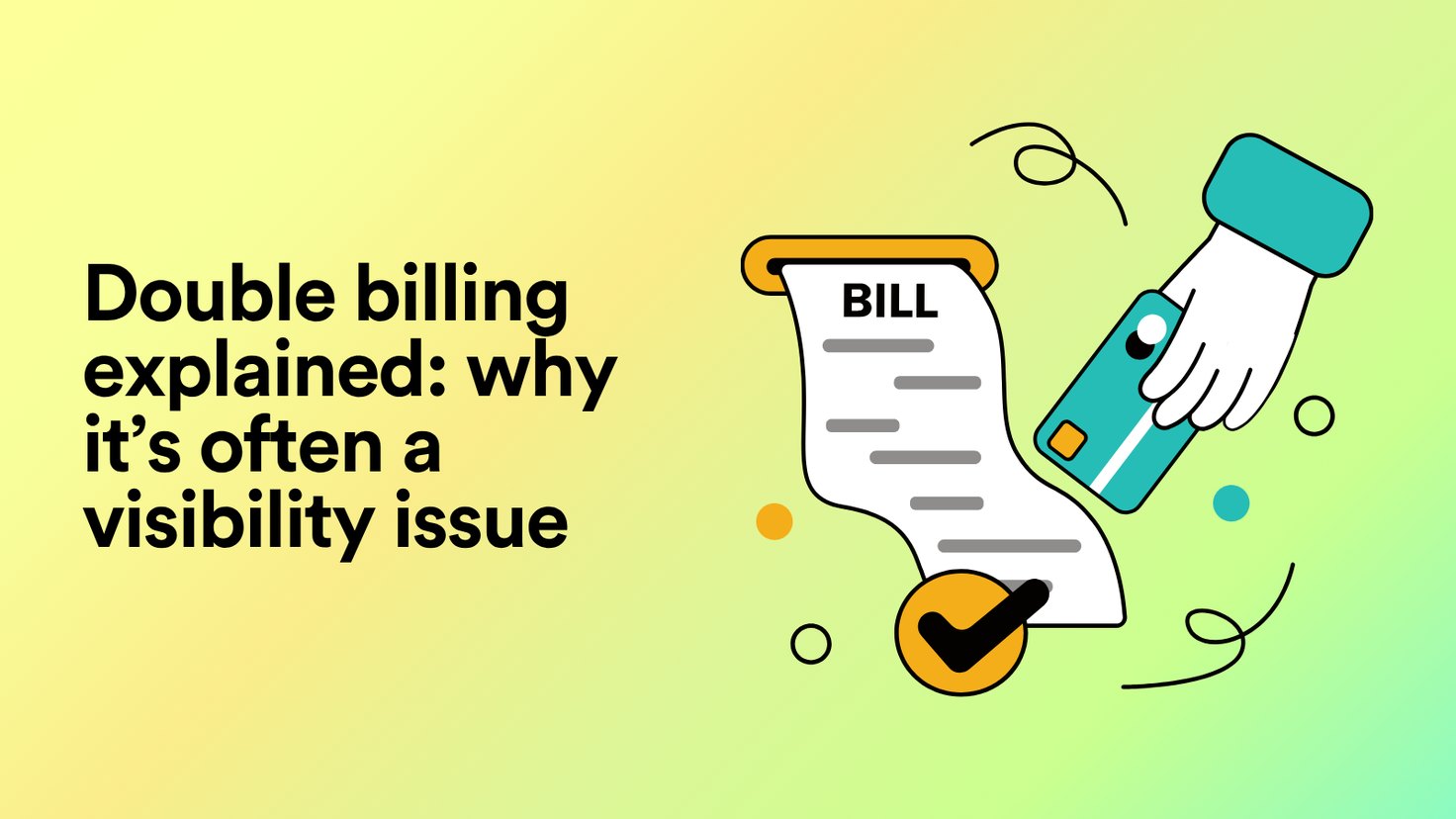
OK, let's talk double billing! It's often discussed as a major billing concern – particularly in law. However, its meaning in day‑to‑day work is far more mundane and routine.
When you take a proper look at what double billing actually is, you’ll see it rarely results from intentionally charging for the same work twice. It comes from how lawyers actually work day-to-day and how their days are structured. For instance, they're always switching between tasks, and they often have to keep track of their time by hand.
This makes it hard to know exactly how time was spent, and that's how double billing can happen, not because someone is willfully choosing to do it, but because it's that easy to lose track of things.
So, if you’re ready to reduce your double billing by improving visibility into your time, join me as we dissect the real causes of double billing, how it can crop up in your daily workflows, and why time tracking challenges make it so common.
Key Takeaways
- Double billing is typically an unintentional byproduct of visibility gaps rather than intentional duplication.
- Overlap tends to be an unfortunate byproduct of manual time tracking thanks to forgotten timers, approximations, and memory-based reconstruction.
- Legal workflows can increase the risk of double billing as tasks are spread across multiple matters, channels, and administrative categories.
- All professional environments face similar daily challenges. Why? Because fluid work doesn’t fit neatly into rigid reporting structures.
- When we enter time after the fact, the gap between the workflow we record and the workflow you actually experience grows, and the chances of you duplicating time increase.
- The best way to avoid inadvertently double billing is to increase real-time visibility, such as using automatic tracking tools.

What is double billing?
So, to reiterate, double billing happens when you're charging twice for the same thing. That said, in real-life work situations, it's not always that overly simplified or straightforward.
Sometimes, it can be a bit more complicated. As such, double billing can occur when two separate time entries accidentally overlap, as they cover the same work period.
To give you a better idea, here are some typical examples of what double billing might look like in your day-to-day:
- Entering the time for a document review and later adding a separate entry for the quick edits made during that same review session.
- Logging a call for one client file and recording the follow‑up email for another, even though both happened within the same 15‑minute window.
- Rounding small tasks up to standard increments, which makes overlapping work appear as two distinct entries.
- When you’re trying to piece together a crazy afternoon from memory, but you think you've accidentally double-booked a time slot for two different things.
These overlaps can happen without anyone even realizing it, and they're not typically intentional. Like I said at the top, they often come from the way people track time manually.
To really get why double billing occurs so easily, you need to understand what it looks like in real situations.
Causes of double billing
Double billing typically stems from the mechanics of how time is captured rather than from the work itself. Four of the more prevalent underlying processes making overlaps more likely can include:
- Reconstruction: When time is logged after the fact, you need to reconstruct it. When you have to rely on recall rather than real‑time records, it makes small overlaps difficult to detect.
- Increment‑based systems: When we round time off to the nearest standard unit, small differences in timing get lost. This makes it tougher to identify those duplicate blocks of time.
- Task fragmentation: Work is broken into short, interleaved actions, and without a continuous record, those fragments can easily be logged as separate entries.
- Context switching: Naaaw, our old nemesis. We've said it before, and we'll no doubt say it again; context switching (often under the guise of "multitasking") is counterproductive. Moving between multiple client files in rapid succession blurs the boundaries between tasks (especially when time is logged later via reconstruction)
How double billing in law tends to happen
In the legal field, double billing often emerges from the structure of the work itself. I’m sure any lawyers reading will attest that they rarely move through their day in clean, sequential blocks. Client needs tend to surface unpredictably, so your priorities can shift swiftly.
For context, a single hour might include:
- Reviewing a draft
- Answering a client's email
- Taking a call
- Returning to the draft again
All of the above can be tied to different files, and all happen in close succession. When time is subsequently entered into a billing system, those touchpoints can easily be captured as separate, non‑overlapping entries, even though the underlying work was interwoven.
In other words, legal work – just like knowledge work – spans multiple channels. So think:
- Document edits
- Research tabs
- Protracted email threads
- Case management systems
- Myriad of messaging platforms.
Without a unified view of these activities, it’s difficult to see how they can intersect.
Again, and particularly in this often chaotic environment, double billing isn’t born from intent – it arises simply as a byproduct of the pace, complexity, and fragmentation of legal work itself.

Double billing meaning in daily work
Beyond the realm of law, double billing turns up for many of the same structural reasons. Most roles now involve a steady flow of small, interdependent tasks rather than long, uninterrupted stretches of focused work (imagine the joy). People shift between tools, impromptu chats, and actioning deliverables in ways that feel natural in the moment but are tricky to reconstruct with anything resembling accuracy later.
What often drives unintentional duplication is the way organizations require time to be categorized. For instance, a single block of work might touch multiple projects, cost centers, or internal teams. When that work is later divided into separate entries, the same minutes can be allocated twice simply because they don’t fit neatly into that one administrative box.
Another factor is the tendency to rely on retrospective time capture (fancy way of saying “logging time”). When people log time at the end of the day, or even the end of the week, they’re piecing together a sequence that probably never felt linear to begin with. In that gap between lived workflow and recorded workflow, double billing becomes surprisingly easy to adopt without you being fully cognizant. This, naturally, can lead to some needlessly awkward client conversations.
The impact of double billing on workflow quality and wellbeing
Double billing points to more than a recording problem; it points to a workflow that’s become more difficult to navigate.
When you see overlapping entries, it can indicate that on that particular day, tasks were scheduled too close together, priorities shifted rapidly, or work was passed from one channel to another too quickly for you to record.
That compression changes the rhythm of the day. People can sometimes be slower to react but somehow quicker to barrel through the work, which makes the line between one task and the next unclear. This has a direct effect on the quality of your output.
When work is done in fast, interleaved chunks, it’s difficult to maintain a clear picture of what has been done, what needs to be done, and where the last bit of progress was made. There are small delays as people reorient, re-open tools, or retrace their steps to get back to the full context. Often, this broken flow leaves a visible trace in the form of duplication in the time entries.
There is a well-being aspect at play here as well. A day that feels scattered is more tiring than a day of the same work that feels cohesive. Instances of double billing can highlight these friction points, showing where the workflow demanded more switching, more recall, and more re-entry than the person had capacity for. Addressing it improves accuracy and also gets you to a more sustainable pace.
Double billing and time tracking challenges
Double billing is much more common where the underlying time tracking method can’t match how people really work. Specifically, there are several drawbacks to manual tracking that make overlaps almost inevitable:
- Timers can be forgotten: Real work takes priority, and remembering to start or stop a timer rarely matches the pace of your day.
- Stopping and starting interrupts your flow: Each interruption breaks your concentration, especially during short, reactive tasks.
- Small tasks get lost: Quick check-ins, replies, or edits rarely feel “log‑worthy” in the moment.
- Entries become approximations: Again, when time is logged later, it reflects memory rather than reality.
Most importantly, you can see your own data first, reinforcing a privacy‑first approach where you maintain control over your timeline. With a complete, accurate record of your day, reconstructing work becomes far easier and more precise.
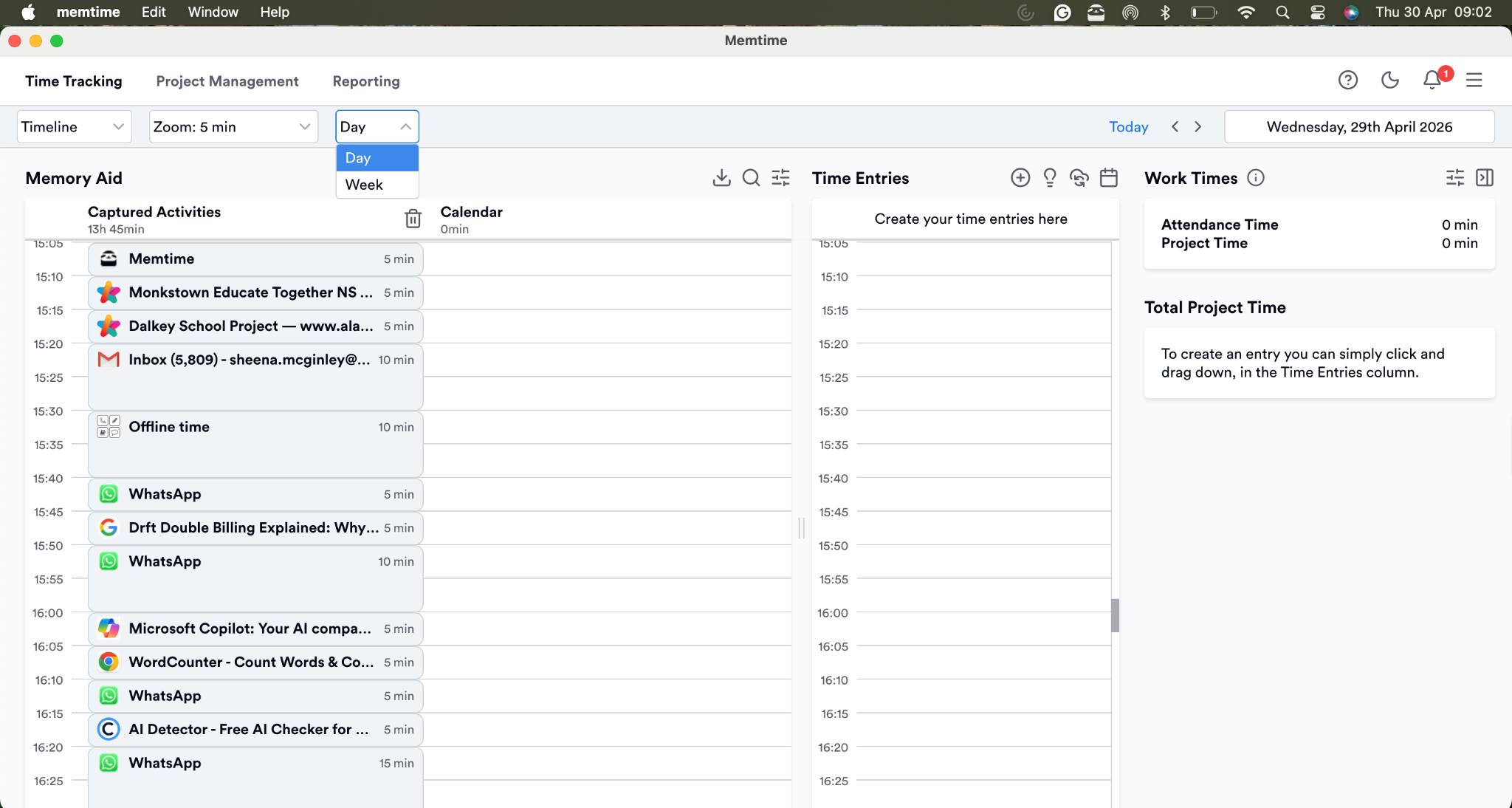
For teams that bill in increments, Memtime offers flexible granularity. Time can be grouped into billing increments (e.g. 6 minutes), aligning with common legal billing practices while still allowing you to view your day in finer detail when needed.
And because Memtime integrates with leading project, matter, and practice management systems, recorded time can be connected directly to the right client or file seamlessly.
To read more on how Memtime can support your practice, make your way over to our dedicated page for law firms and legal teams.
FAQs
How does double billing affect client trust, even when it’s unintentional?
Even without intent, overlapping work can still lead to awkward conversations with clients, especially when billing statements don’t match their expectations of how long something should take. Even small discrepancies can erode confidence in the billing process, which is why visibility and accuracy are just as important as intent.
Why is double billing harder to detect in digital‑first workplaces?
At best, modern workflows include email, chat, cloud documents, and task systems. Because these tools lack a shared timeline, overlaps are invisible unless a system can reconstruct your activity across all of them.
Does double billing only happen in billable hour environments?
That would be a no. Duplicate entries can occur for any role that involves time allocation – project reporting, internal chargebacks, grant work, consultancy, or agency retainer models – when tasks cross multiple categories.
Can double billing occur even with good personal organization?
Yes. The most organized professionals still have fragmented days and switch tasks quickly. The issue isn’t discipline, it’s the misalignment between the complexity of modern workflows and our human brains.
How does organizational structure contribute to double billing?
When work has to be split across multiple clients, matters, cost centers, or internal codes, the same block of time can be allocated twice simply because it doesn’t fit neatly into one of those categories.
What’s the most effective way to reduce double billing without adding administrative burden?
The best way to improve real-time visibility is to start using it! Automatic time tracking tools help people allocate time accurately, with less reliance on memory and no extra effort, while surfacing overlaps early on.

Sheena McGinley
Sheena McGinley is a columnist and features writer for the Irish press since 2008. She’s also a business owner that is conscious of how time tracking can foster progress. She wrote for SaaS companies and businesses that specialize in revenue optimization by implementing processes. She has the unique ability to digest complex topics and make them easy to understand. She shares this precious skill with Memtime readers. When she's not making words work for people, Sheena can be found taking (very) brisk dips in the Irish Sea.