Workload Complaints Are a Signal — But What’s Missing?

If you manage a team, you’ve probably heard your people mumble workload complaints. Perhaps you've found it hard to respond – and not because you're not concerned or taking their gripes seriously, but rather you don’t have a clear view of what’s actually happening in their day‑to‑day work.
This challenge is even more acute in remote and hybrid teams, where so much of the real workload is, for all intents and purposes, invisible. What you’re missing is clarity.
Workload complaints are real, but they rarely give you clarity. Instead, they highlight a gap: your team experiences their day in detail, while you see plans, tasks, and outcomes. Both perspectives matter, but – let's face it – neither is a complete picture. And that’s where friction starts. Said friction often comes from what’s happening inside the workday itself:
- Context switching
- Interruptions
- Invisible work
- The constant gap between planned and actual work
These are the forces that quietly distort workload, even when the distribution seems reasonable at a high level. So keep reading to find out how you can bridge that gap, understand what’s really driving the pressure, and support your team with tangible insights rather than guesswork.
Key Takeaways
- Complaints about workloads are early signs that something isn't working at work; they show stress, not a full explanation of what's wrong.
- Most of the time, people are more frustrated with their work because of things like unclear priorities, conflicting expectations, hidden responsibilities, and unpredictable days than with the amount of work they have to do.
- Plans miss real effort because task lists don't show how urgent, complicated, interrupted, or invisible work is. This means that two people with the same assignments can have very different workloads.
- Daily problems like work piling up, priorities colliding, responsibilities drifting, and progress stalling quietly change the workload long before anyone says anything.

Why workload complaints are a signal, not the full picture
When someone raises workload issues, first, thank them for flagging them and clap yourself on the back for being approachable. As a manager, it's important. Why? Because they’re highlighting a symptom of an underlying issue – not an entire diagnosis.
You can see the plan from your point of view, including the roadmap, the due dates, and how the work will be divided up. In short, everything may seem workable in theory. But your team is dealing with the friction points you can't see: the small tasks, the changing priorities, and the mental strain of having to deal with competing demands. That's why complaints about work often seem impromptu, arbitrary, and definitely unclear. They’re real issues, but they’re incomplete.
The most important thing is to see that signal, that initial complaint, as your starting point. It lets you know that something is wrong, but not the why. Before you can respond accordingly, you need a better idea of how time is really being spent.
This isn't an invitation to keep an eye on or monitor your people, but to understand the reality behind the symptom so you can help your team with facts instead of assumptions.
What employees who complain about workload are really saying
Workload signals typically (and unsurprisingly) come wrapped in the language of “too much work,” but the real message is about conditions, not capacity. Employees want a workday that's more linear, with clear expectations and a path to delivering good work that isn’t constantly disrupted.
So, consider this a decoder to help you understand what’s actually being communicated, especially when the complaint sounds vague, laden with emotion (often born of ongoing frustration), or too wily to pin down. In short, most employees aren’t saying, “I can’t handle my job.” They’re signaling one or more of these underlying issues:
- Muddled priorities: “Everything feels urgent, all the time, so I’m not sure what needs doing first.”
- Conflicting expectations/chain of command: “Different people are pulling me in different directions, and I’m not sure who to prioritize.”
- Hidden responsibilities: “I’m doing work that isn’t visible, but it still takes a huge amount of my time and energy.”
- Unpredictable workflow: “I start out with clear priorities, but my day keeps getting reshaped/hijacked by unplanned tasks.”
- Lack of control: “I’m unable to get enough focused time to do the work I’m responsible for.”
Why team workload look balanced on paper but not in practice

From a manager's point of view, the workload for your team often seems to be evenly split: Everyone knows what they need to do, when they need to do it, and – ultimately – the plan seems fair.
But as soon as you look at the workday instead of the plan, that balance you thought you had starts to break down. What looks neat in a system doesn't always show how people are really working.
The gap is caused by all the things that your planning tools don't do a good job of capturing. Two people with the same number of tasks may be dealing with deliverables that are very different in terms of how hard they are, how urgent they are, or how broken up they are.
- One person might have long periods of time when they can focus,
- while another might be constantly pulled into support work, answering questions, or fixing problems that crop up unexpectedly.
On paper, the work is the same. In practice, the effort required is not.
And then there’s all the variabilities to consider. For instance, some roles are interruption-dependent or require more reactive work. Others carry invisible commitments or increased responsibility for unplanned tasks. While this can really impact someone’s workload, it doesn’t – say it with me now – show up across any planning tools.
If you’re a manager, the takeaway is this: if the plan seems to be balanced but your team feels stretched, you need to trust the lived experience of your team. The imbalance is real, and you can bet it’s happening in those pesky parts of the workday you just can’t see.
How workload distribution breaks down in real workdays
OK, so we’ve established that, on paper, workload distribution can mirror a team member’s task list and can, therefore, appear fair. In actuality, it can be far more (and needlessly) chaotic. The issue isn’t the assigned work; it’s how the real‑time dynamics of the day skew where effort is spent.
As such, it's worth analyzing how you, as a manager, can preemptively spot a breakdown by identifying a few practical patterns. These can present as…
- Stacked work: Assignments that are meant to be spread across the week can all accumulate on the same day, creating unplanned/time-consuming spikes in effort.
- Colliding priorities: Even when a task list seems fairly reasonable on the surface, two or more vying “top priorities” can come up at once, forcing an employee to choose which commitment to postpone.
- Undefined responsibilities: In an effort to expedite a project, your team silently takes on extra work like coordination, support, or follow‑up tasks that aren’t formally assigned to them but simply become their responsibility by default.
- Stalled progress: Tasks that should progress steadily get stymied, not due to a lack of skill or effort, but because the person responsible is spinning a lot of competing plates that “the plan” didn’t account for.
- Off-kilter recovery time: After a busy stint, some team members can regain their momentum quickly, while others stay overloaded for various reasons. The resulting imbalance tends to compound over time.
As I said, these patterns may not show up in planning tools. That doesn’t stop them from negatively impacting distribution and effort. Once you, as a manager, know what to look for, it becomes clear why a theoretical workload can feel rather different in truth.

What drives workload imbalance in remote and hybrid teams
In remote and hybrid settings, workload imbalance frequently arises from structural conditions absent in co-located teams. Again, the work may have the veneer of fairness on the surface, but the working environment affects how it actually gets done.
A few things always tip the scales:
Tool‑driven fragmentation
Switching between platforms, channels, and workflows creates uneven cognitive load. Some roles absorb far more of this friction than others, even when their task list looks identical.
Asynchronous lag
Time zones and async workflows create delays that compound. One person waits for answers while another moves ahead – creating uneven pressure and progress.
Proximity to decisions
Slack or Teams are great tools. That said, getting pinged within an inch of your existence doesn’t necessarily mean that every team member is getting the requisite information at the same time.
Some people hear about changes earlier because they’re in certain conversations or loops, while others only see the update after the work dynamic has shifted. That delay then forces them to corroborate what's changed, confirm priorities, or adjust their plan. This is all extra effort that never shows up on the task list.
Communication burden
Certain people become the “communication hubs”. Why? Because they respond quickly, know the context, and/or are natural communicators. These approachable souls often have their day filled with messages, clarifications, and coordination that others never absorb.
Shifting role scope
Without the informal support of shared spaces, team members can quietly expand their roles to fill any gaps – undertaking onboarding, troubleshooting, or even emotional support without it being flagged or recognized in terms of workload.
As you can guess, remote and hybrid teams feel these pressures long before they show up in outcomes.
Understanding them can give you, as a manager, a clearer view of how workload imbalance can develop in day‑to‑day work.
How Memtime can help teams struggling with workload clarity
People often stop addressing their workloads for a number of reasons. One is because they simply can’t recall the trajectory of their working day.
When two people tell the same story about the same week, it's not that anyone is “incorrect” about how said week unveiled itself, but rather that memory is subjective.
Memtime helps people understand their own workday better without adding additional stress or oversight. This gives everyone a defined starting point.
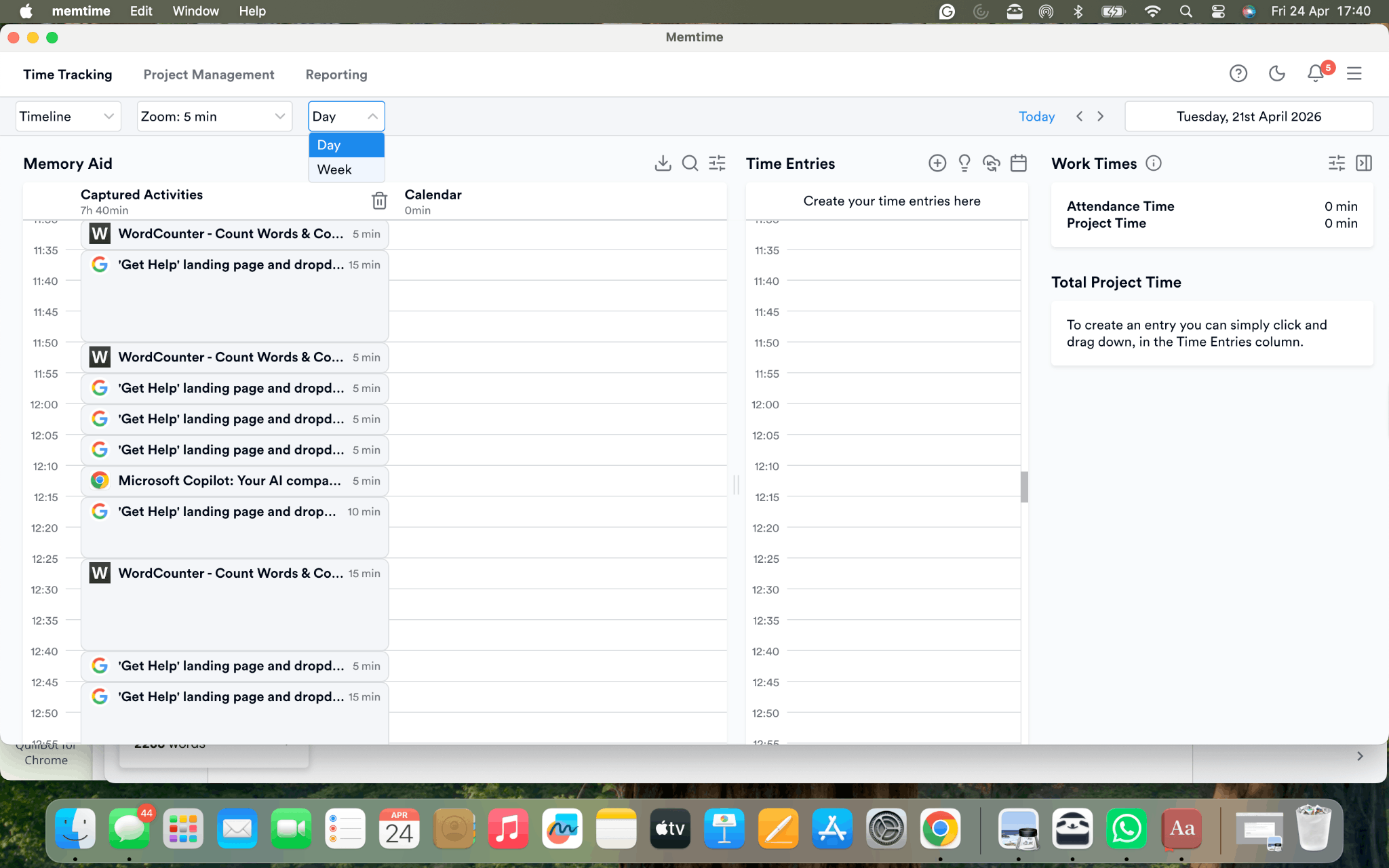
To be clear, Memtime is not for monitoring your team; it's for making things transparent for each person. For example, it's:
- Private by default: By that, we mean time tracking data stays on the user's device until they decide to share it.
- No forced tracking: People choose what to keep, what to delete, and what to use.
- No reporting layer: Managers can't see activity logs or timelines, which can build trust.
For users who want more structure, Memtime Projects (price included) adds an optional way to organize time in the following four ways:
- Users can assign their time to projects or tasks.
- This creates a clearer link between daily activity and broader goals.
- Nothing is enforced – people choose their own level of detail.
- Structure supports clarity, but control stays with the individual.
If teams want to connect this clarity to their existing tools, time entries can also be sent to other projects and billing software through Memtime’s integrations.
In tandem, these features provide teams with a more grounded way to talk about workload clarity – not by monitoring people, but by giving individuals the insight they need to participate in those conversations with confidence.
FAQs
How can managers surface workload issues before they escalate?
Schedule regular check-ins that focus not just on the tasks that need to get done, but how the work is flowing through the day. If you give people a chance to talk about issues early, you can see patterns before they become complaints.
What makes workload conversations feel high‑stakes for employees?
People fear that if they raise problems, they will look incompetent. If you talk about workload in terms of conditions rather than personal capacity, it facilitates a more honest conversation when that emotional barrier is lowered.
How can teams reduce the hidden layer of work that never shows up in tools?
Planning cycles should clarify informal responsibilities. When they know about it, teams can distribute work more judiciously, like coaching, troubleshooting, or coordinating, instead of letting it accumulate.
What’s a practical way to spot uneven workload in remote teams?
Watch for discrepancies between effort and progress. If someone is working hard but their work keeps getting stuck or reset, it can be an indication of delays, information gaps, or reactive work that others aren’t experiencing.

Sheena McGinley
Sheena McGinley is a columnist and features writer for the Irish press since 2008. She’s also a business owner that is conscious of how time tracking can foster progress. She wrote for SaaS companies and businesses that specialize in revenue optimization by implementing processes. She has the unique ability to digest complex topics and make them easy to understand. She shares this precious skill with Memtime readers. When she's not making words work for people, Sheena can be found taking (very) brisk dips in the Irish Sea.